Two of the most discussed solutions on the market are Xhorse VVDI MLB Tool and Keydiy KD-MP MLB Tool. While both are capable of handling MLB systems for Volkswagen Group, Porsche, and other high-end platforms, their design philosophy and daily usages differ significantly.
This comparison is based on real workshop usage and highlights where each tool truly stands.
| Feature | Xhorse VVDI MLB Tool | KEYDIY KD-MP MLB Tool |
| Image |  |
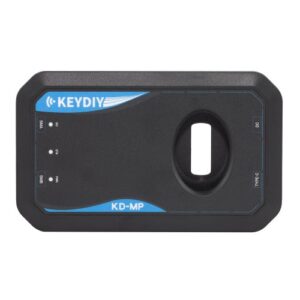 |
| Hardware Design | Modular setup with MQB adapter | All-in-one integrated design |
| Cables & Accessories | Multiple cables and adapters | Single USB connection |
| MQB Support | Requires additional MQB adapter | No extra adapter required |
| Data Storage | Local storage with optional cloud backup | Primarily cloud-based |
| Offline Capability | Strong (local data reuse) | Limited (cloud-dependent) |
| Calculation Time | ~8–10 minutes | ~8 minutes |
| Firmware Stability | Needs careful version management | Generally stable out of the box |
| Mobile Programming | Not supported | Supported via OBD “whistle” + app |
| Cost per Operation | No point in consumption | Uses points per calculation |
Workflow and Usability
VVDI MLB approach focuses on local control and data ownership. Immobilizer data can be saved on your computer and reused later without recalculation, making it ideal for offline work or repeat customers. However, the modular setup means more cables, more organization, and slightly longer preparation time.
In contrast, KD-MP MLB emphasizes simplicity and mobility. A single USB connection, fewer accessories, and mobile key programming through a phone app make it very attractive for on-site or field work. The trade-off is its reliance on cloud services and point-based operations.
